The World Is Pricing In Chaos Everywhere at Once. Here's What That Means for Your Portfolio.
Something unusual is happening across prediction markets right now. It's not one crisis being priced in. It's five or six of them, all at the same time, across different parts of the globe. And the compound effect of all that uncertainty is creating a pattern that investors should pay close attention to.
Let's walk through the numbers.
Prediction markets give an Iran nuclear deal only a 42% chance of happening, which means there's a 58% probability that no deal materializes and Middle East tensions stay elevated. Meanwhile, WTI crude oil (the benchmark price for American oil) has a 53% chance of hitting $140 per barrel and a 37% chance of reaching $150+ by the end of 2026. Those aren't small numbers. For context, oil was around $70-80 a barrel for much of 2024.
But it's not just the Middle East. Betting markets put a 32% probability on Trump "taking back" the Panama Canal. There's a 34% chance the U.S. acquires some part of Greenland. Reza Pahlavi, the exiled son of Iran's last Shah, has a 22% chance of visiting Iran before 2027, which would essentially imply regime change. Cuba's Díaz-Canel has a 61% probability of leaving power. Venezuela's leadership situation is in flux.
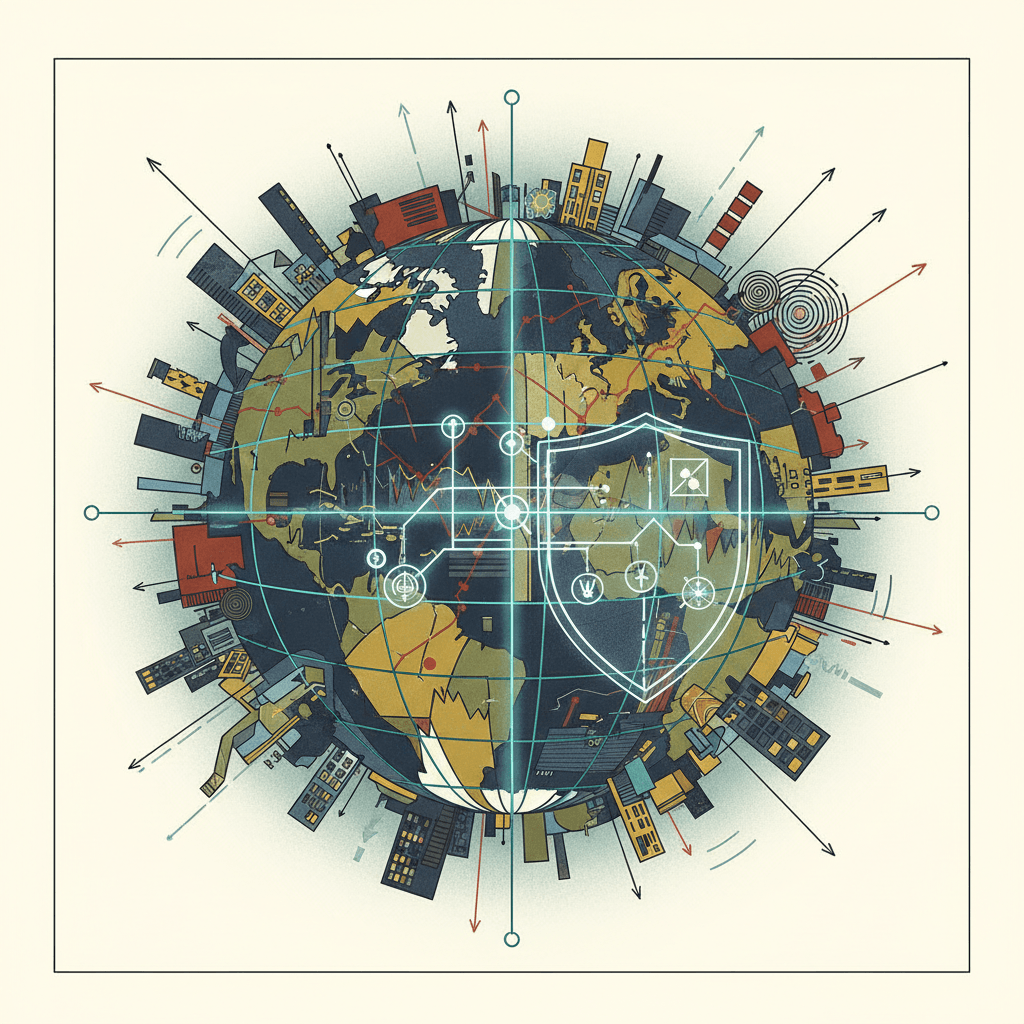
No single one of these probabilities is a sure thing. But zoom out and the picture is striking: prediction markets are simultaneously pricing in elevated risk across the Middle East, Latin America, the Arctic, and Central America. This isn't a single geopolitical crisis. It's a pattern of systemic friction expanding across multiple theaters at the same time.
The Dalio Framework: Why This Pattern Matters
Ray Dalio, the founder of the world's largest hedge fund, has written extensively about what he calls the "big cycle." The basic idea is that when a dominant global power feels its position slipping, it tends to act more aggressively, not less. It projects power, asserts territorial claims, and takes risks that increase friction costs for the entire global system.
Whether you agree with that framework or not, it describes what prediction markets are pricing right now. The U.S. is simultaneously signaling ambitions toward the Panama Canal, Greenland, and Iranian regime change while Latin American governments face instability. That's a lot of moving pieces, and each one adds a layer of risk premium (the extra return investors demand for holding assets exposed to uncertainty) to global markets.
The self-reinforcing cycle looks something like this:
- Geopolitical tensions rise across multiple regions simultaneously
- Energy supply disruption risk increases, pushing oil prices higher
- Higher energy costs feed into inflation, squeezing consumers and businesses
- Central banks keep rates elevated to fight inflation, raising borrowing costs
- Economic stress increases political instability in vulnerable countries
- More instability feeds back into step one
This is the kind of cycle where the whole becomes greater than the sum of its parts.
What This Means for Markets
The broad implication is bullish for oil, defense, commodities, and gold. It's bearish for companies that depend on smooth global trade, cheap fuel, and consumer spending, including airlines and retail.
Supply chain risk premiums should expand. When the world fragments into competing spheres of influence and trade routes become contested, everything costs more to move. That cost gets passed along.
Trade Signals: The Core Positions
Gold via GLD — BUY (82% confidence)
Gold is the classic uncertainty hedge, and this pattern is fundamentally about compound uncertainty. It doesn't matter whether the specific risk that materializes is Iran, Panama, Greenland, or Venezuelan regime change. Gold benefits from all of them. Central banks are already accumulating gold at record pace. In a world where the global order is fragmenting, the store-of-value premium for gold expands. Downside is limited given the current backdrop of elevated inflation, large fiscal deficits, and persistent geopolitical risk.
Defense via LMT — BUY (78% confidence)
Lockheed Martin is the largest U.S. defense contractor. Their F-35 program, missile defense systems, and naval platforms are directly relevant when the U.S. projects power globally. The compound nature of these risks is important: even if one theater de-escalates, multiple others keep defense spending sticky. Panama Canal posturing requires naval presence. Middle East escalation requires air power and missile defense. Arctic ambitions require new capabilities. Each one reinforces the defense spending trajectory.
Energy via XLE — BUY (72% confidence)
The 53% probability of WTI hitting $140+ is a significant signal. Even acknowledging that prediction markets for commodity prices can be noisy and low-volume, the underlying logic is sound: a 58% no-deal probability on Iran keeps Middle East supply disruption risk alive. XLE, the Energy Select Sector ETF, provides diversified exposure across integrated majors, exploration and production companies, and oilfield services. If oil spikes, the entire sector benefits. This is the broadest way to play the energy risk premium without concentrating in a single company.
The Shovels, Not the Gold: Infrastructure Plays
During the California Gold Rush, the people who got rich most consistently weren't the miners. They were the people selling shovels, pickaxes, and denim jeans. The same logic applies here. When geopolitical risk expands across multiple theaters, the real opportunity is often in the companies that supply the infrastructure everyone else needs, regardless of which specific crisis dominates the headlines.
KTOS (Kratos Defense) — BUY (75% confidence)
Kratos is the shovel seller of modern military projection. They make target drones, unmanned aerial systems, satellite communications, and missile defense electronics. When the U.S. increases activity across multiple theaters simultaneously, the demand isn't just for Lockheed's fighter jets. It's for the surveillance, communication, and drone infrastructure underneath those platforms. About 85% of their revenue comes from defense and government contracts. They supply components to all the major prime contractors, which means they benefit regardless of which prime wins a specific contract.
HII (Huntington Ingalls) — BUY (76% confidence)
HII is the sole builder of U.S. aircraft carriers and one of only two nuclear submarine builders in the country. That's not a strong market position. That's a monopoly. Panama Canal power projection, Greenland and Arctic ambitions, Middle East naval presence: they all require ships. When the U.S. acts as global policeman across multiple theaters, the Navy is the primary instrument. The lag between geopolitical tension today and shipbuilding revenue is real (these programs take years), but the order book provides multi-year visibility.
TDG (TransDigm) — BUY (77% confidence)
TransDigm manufactures highly engineered aerospace components: actuators, valves, ignition systems, landing gear parts. These components are used across virtually all military and commercial aircraft. When military activity increases, every platform needs TransDigm parts for maintenance, repair, and overhaul. They're a sole-source provider for many proprietary parts, giving them unusual pricing power. About 45% of revenue is defense-related, and that share rises with geopolitical activity.
RGLD (Royal Gold) — BUY (74% confidence)
Royal Gold is the shovel seller of gold mining. They don't actually mine gold. Instead, they provide streaming and royalty financing to gold miners, collecting a percentage of production. They profit from elevated gold prices without bearing the operational risk of mining, meaning no cost overruns, labor problems, or environmental headaches. When the global order fragments and gold miners expand production, Royal Gold collects royalties on all of it.
PSCE (S&P Small Cap Energy ETF) — WEAK BUY (65% confidence)
Small-cap energy companies are the leveraged play on oil price spikes. Many are oilfield services, equipment, and exploration companies that supply the majors. If WTI moves toward $140+, these companies with higher operating leverage see disproportionate earnings growth. But this is a higher-risk, higher-volatility position.
WEAT (Wheat ETF) — WEAK BUY (58% confidence)
Geopolitical fragmentation historically drives agricultural commodity spikes through supply chain disruption and energy-input cost escalation (fertilizer production is extremely energy-intensive). If oil hits $140+ and instability persists, food commodity risk premiums expand. Wheat is particularly sensitive to global instability. This is a more speculative position with lower conviction than the core plays.
Why This Matters for Regular People
You don't need to be a trader to feel the effects of this pattern. If oil moves toward $140, you'll feel it at the gas pump within weeks. Higher energy costs feed into the price of basically everything, from groceries to shipping to heating your home. If you have a 401(k) with standard index fund allocations, you're heavily exposed to companies that struggle when energy costs spike and global trade gets more expensive.
The defensive shift described here, toward energy, gold, and defense, isn't about being a doomsday prepper. It's about recognizing that when prediction markets price in elevated risk across five different regions simultaneously, the probability that at least some of that risk materializes is quite high, even if any single crisis has a coin-flip chance of resolving peacefully.
The Risks You Need to Know
This analysis comes with real risks, and being honest about them is important.
Defense stocks like LMT are already trading at elevated multiples that reflect known tensions. A surprise Iran deal or broad de-escalation could cause a 10-15% pullback. Budget sequestration or political gridlock could cap spending growth.
For energy, the WTI $140+ probabilities actually dropped 5-13% in the last 24 hours, meaning momentum is fading, not building. The 42% probability of an Iran deal is not negligible. If a deal happens, oil risk premium would collapse rapidly. And sustained high oil prices could trigger a global recession that destroys demand, reversing the entire trade. OPEC+ spare capacity and U.S. shale production could also cap price spikes.
Gold is already near all-time highs, which limits the upside asymmetry. A rapid de-escalation across theaters could cause a 5-8% correction. Dollar strength from U.S. economic outperformance or rising real interest rates would be headwinds. And gold pays no income, so there's an opportunity cost if the risk premium never fully materializes.
Smaller positions carry their own dangers. KTOS is a small-cap stock with higher volatility that could drop 20%+ on any shift in defense sentiment. HII faces chronic cost overruns and labor shortages in shipyards, and they're already at full capacity, which may limit how quickly they benefit from incremental demand. TDG carries over $20 billion in debt and has faced DOD scrutiny over its pricing practices. PSCE can drop 30%+ rapidly on an oil price reversal, and many small-cap energy names have weak balance sheets. WEAT suffers from contango drag, a structural problem where futures-based commodity ETFs slowly lose value over time just from rolling their contracts forward.
Perhaps most importantly, prediction market liquidity for some of these contracts is thin. The probabilities may overstate actual risk, and commodity price prediction markets are notoriously noisy and low-volume.
The honest assessment: this pattern has an overall confidence of 80%, which is high but far from certain. The thesis depends on multiple risks persisting simultaneously. If even two or three of these situations resolve peacefully, the compound risk premium contracts and many of these trades give back gains.
But that's the nature of hedging against a fragmenting world. You're not betting that everything goes wrong. You're positioning for the reality that, when five things could go wrong at once, the odds of at least a few of them actually going wrong are uncomfortably high.
Analysis based on prediction market data as of April 6, 2026. This is not investment advice.
How This Story Evolved
First detected Apr 6 · Updated daily
The article was updated to add the Panama Canal as a specific risk hotspot and to introduce a new theme: that the U.S. is acting more aggressively on the world stage than it has in a long time. The headline was also changed to more directly connect the global risks to readers' personal investments.
Read latest →The article was rewritten to be more specific and direct, naming actual regions like the Middle East, the Caribbean, and the Arctic instead of using a vague highway driving analogy. It also added a clearer focus on how these risks affect investing.
Read this version →The article expanded the number of crises mentioned from "a half-dozen" to "a dozen" and added a car analogy to help explain the idea of compounding global risk. The headline also shifted focus to emphasize prediction markets more directly, rather than the idea of having a "playbook" to respond to chaos.
Read this version →The headline was simplified to sound more conversational, and the opening was rewritten to be more specific, mentioning "a half-dozen crises" and adding a new subheading called "The Signal: Compound Geopolitical Risk." The new version also moves more quickly into listing actual examples, like an Iran nuclear deal probability.
Read this version →The headline was updated to specify "prediction markets" as the source of the chaos pricing, replacing the vaguer phrase "the world." The article's opening was rewritten to be more vivid and descriptive, adding a new section header called "The Map of Global Risk" and framing the multiple crises as rising "friction costs" for everyone.
Read this version →The headline was updated to emphasize that chaos is happening everywhere at once, rather than just describing markets as "on fire." The article's opening also became more direct and data-focused, quickly jumping into specific statistics like the 42% chance of an Iran nuclear deal instead of building up slowly with background explanation.